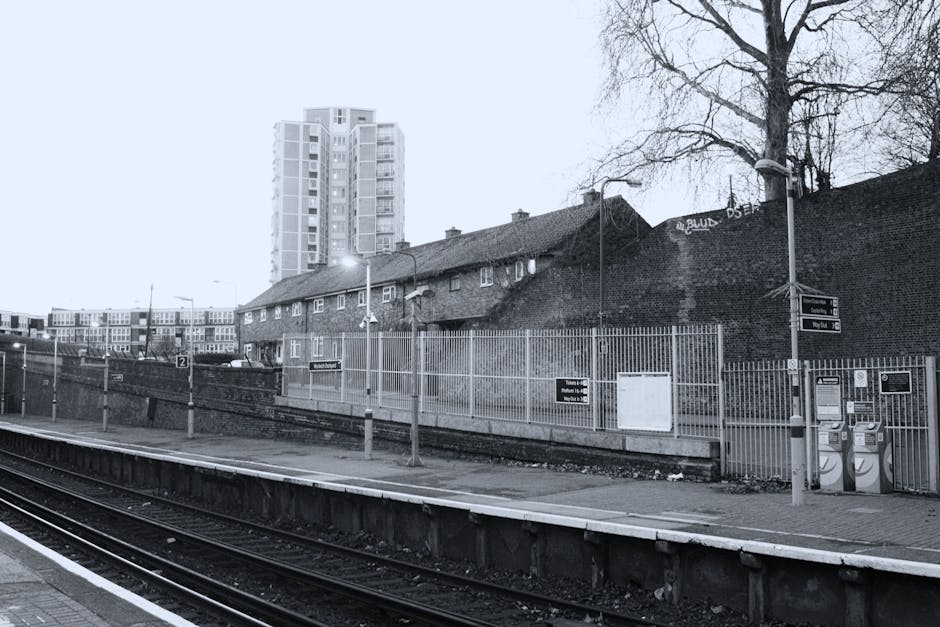
Turnham Green Station frontage planting case study gardeners: a practical guide to creating a smarter, greener station approach
Frontage planting sounds simple enough until you are standing on a busy London pavement with narrow access, changing light, constant footfall, and a space that has to look decent all year. That is where a Turnham Green Station frontage planting case study gardeners approach becomes useful. It is not just about adding colour. It is about shaping a station frontage so it feels welcoming, well-kept, and practical for everyday use.
In this guide, we look at what frontage planting involves, why it matters around a transport hub like Turnham Green, and how gardeners plan, install, and maintain planting that can cope with real-world conditions. You will also find a step-by-step process, expert tips, a checklist, and the kinds of mistakes that can turn a promising project into a bit of a headache. Let's face it, a station entrance gets judged in seconds.
Table of Contents
- Why Turnham Green Station frontage planting case study gardeners matters
- How Turnham Green Station frontage planting case study gardeners works
- Key benefits and practical advantages
- Who this is for and when it makes sense
- Step-by-step guidance
- Expert tips for better results
- Common mistakes to avoid
- Tools, resources and recommendations
- Law, compliance, standards, or best practice
- Options, methods, or comparison table
- Case study or real-world example
- Practical checklist
- Conclusion
- Frequently asked questions
Why Turnham Green Station frontage planting case study gardeners matters
A station frontage is a threshold space. People arrive there tired, in a rush, looking for clarity. A planted frontage can soften hard edges, help the station feel cared for, and make the whole street scene more pleasant. Around Turnham Green, where local character matters and pedestrian movement is constant, that first impression carries weight.
Good frontage planting also does something subtler. It helps frame entrances, guides the eye, and can make an otherwise plain boundary feel intentional. If the planting is done badly, though, it can do the opposite: clutter sight lines, spill into walkways, or quickly look tired. The difference is usually in the planning, not the planting itself.
From a gardener's point of view, this kind of project sits right between landscape gardening and ongoing maintenance. You are not simply dropping in a few shrubs. You are designing for public-facing visibility, seasonal performance, and practical upkeep. If you are exploring broader service support, it is worth looking at landscaping support and landscape gardening solutions that can handle both design and long-term care.
There is also a community angle. A tidy, well-planted frontage often suggests stewardship. People tend to notice when a place is neglected; equally, they notice when it is quietly cared for. Small things matter. A clean edge, a healthy hedge line, a seasonal planting bed that does not collapse into itself by mid-summer. Those details make a station feel looked after.
How Turnham Green Station frontage planting case study gardeners works
A frontage planting project normally begins with a site walk. That means looking at the space as a commuter would, not as a gardener would. Where do people enter? Where are the visual pinch points? Is there enough soil depth, or are planters the smarter choice? Does the area get harsh afternoon sun, wind exposure, or splash from passing traffic?
Once that is clear, the planting plan starts to take shape. In practical terms, the gardener is balancing four things at once:
- Function - keeping the frontage neat, safe, and accessible.
- Form - making the entrance look cohesive and inviting.
- Durability - choosing plants that can cope with London conditions and regular maintenance.
- Maintenance reality - designing something that can actually be kept up over time, not just admired on day one.
A good frontage scheme often uses a layered approach. Low planting or compact shrubs near the front, slightly taller structural plants behind, and a repeating palette that brings order rather than visual noise. If hedging is involved, it usually needs disciplined shaping so it supports the design instead of swallowing it. Services such as hedge trimming are often part of the ongoing rhythm, especially where public sight lines matter.
In some cases, the site may also need clearing before anything new can go in. That is where garden clearance becomes the unglamorous but essential first move. Old debris, poor soil, dead material, or broken edging can all undermine the finished result if they are ignored.
Truth be told, frontage planting is a bit like setting the tone for a room. If the "first line" is messy, everything feels off. If the front is calm and structured, the whole place seems more confident.
Key benefits and practical advantages
Frontage planting around a station is not only about aesthetics. The stronger projects usually produce a practical payoff too. Here are the main benefits gardeners aim for.
- Better visual identity: planting gives the frontage a recognisable, cared-for look.
- Improved public perception: people often read neat planting as a sign of good management.
- Seasonal interest: the space does not look flat all year if structure and colour are planned well.
- Support for biodiversity: even modest planting can provide value for pollinators if the right species are chosen.
- Clearer boundaries: planting can help define access routes without making the area feel defensive.
- Lower long-term mess: a well-built scheme is easier to maintain than a patchwork of random additions.
There is also a surprisingly important operational benefit: maintenance becomes more predictable. A robust planting design, supported by regular garden maintenance, is usually much easier to keep under control than a frontage that relies on constant rescue work. A tidy system tends to stay tidy. That sounds obvious, but it is where many projects go wrong.
Where there is heavy pedestrian traffic, the plants also need to be robust in a physical sense. They should not flop into the path, create hidden trip points, or require constant replacement. The best installations are a little understated at first glance, then quietly impressive once established.
Who this is for and when it makes sense
This kind of project makes sense for anyone responsible for a public-facing entrance or boundary that needs to look good without becoming a maintenance burden. It is especially relevant for transport-adjacent sites, local businesses, community buildings, managed residential fronts, and property owners who want a polished approach rather than a one-off tidy-up.
It also suits people who are frustrated with a frontage that feels unfinished. Maybe the entrance is bare and hard, maybe the planting is patchy, or maybe there is a recurring issue with weeds, overgrowth, or tired pots that never quite recover. In those situations, frontage planting can feel like a reset.
It may not be the right answer if the site has severe access restrictions, no irrigation options, or if the maintenance budget is too limited to support living planting. In those cases, the conversation often moves toward simpler structure, hard landscaping, or very low-maintenance planting choices. A full services overview can help you think through the options before committing.
And if you are weighing up whether to keep patching an existing frontage or rebuild it properly, ask yourself this: is the space simply in need of maintenance, or is the design itself the problem? That question saves a lot of wasted effort.
Step-by-step guidance
Below is a practical way gardeners typically approach a station frontage planting brief. Not every project follows exactly this order, but it is a solid framework.
- Assess the frontage
Look at access, drainage, exposure, visibility, and existing condition. Check where people walk, where litter collects, and where plant material is likely to be knocked or trodden on.
- Define the goal
Decide whether the main aim is visual improvement, screening, wayfinding, pollinator support, or all of the above. A planting scheme without a clear purpose can become decorative clutter.
- Clear and prepare the site
Remove debris, failed planting, weeds, old edging, and anything that blocks good soil preparation. If the area is cluttered or overgrown, a proper clearance service can help reset it cleanly.
- Check soil and drainage
Many frontage problems come down to poor ground conditions. Compacted soil, shallow beds, or waterlogging will punish even decent planting. If the soil is weak, the planting plan needs to be adjusted rather than pushed through.
- Choose a planting structure
Use a mix of evergreen structure, seasonal interest, and resilient filler plants. For public frontage work, repetition usually looks better than too many different species.
- Install with access in mind
Spacing matters. Leave room for growth and maintenance access. If a plant can only look good while tiny, it is the wrong plant for the job.
- Finish with edging, mulching, and tidying
Sharp edges and mulch make a huge difference. They reduce weeds, hold moisture, and give the frontage a polished look from day one.
- Set a maintenance rhythm
Plan regular visits for weeding, deadheading, pruning, watering checks, and replacement planting where needed. A scheme without aftercare is just a short-lived event.
A useful rule of thumb: if the frontage looks finished only in the first week, it was underplanned. If it still looks sensible six months later, you are on the right track.
Expert tips for better results
Here is where experience really matters. The best frontage planting jobs tend to share a few habits.
- Use repetition to create calm. Repeating shapes or plant groups makes a busy entrance easier to read.
- Choose plants for the site, not your mood. A plant can be lovely and still be wrong for a windy, high-footfall frontage. Happens all the time.
- Think in layers. Low, medium, and structural planting gives more depth than a flat strip of colour.
- Plan for winter visibility. Many planting schemes look great in June and drab by January. That is avoidable.
- Keep maintenance access realistic. If gardeners cannot safely reach the back row, the design needs revisiting.
- Prioritise healthy root establishment. New planting often fails because watering and establishment are rushed.
- Work with the station environment. Dust, shade, reflected heat, and pedestrian pressure all affect what will thrive.
One small but important tip: use the border and the paving line together. A strong edge can make modest planting look much more intentional. It is not flashy, but it works. And in public spaces, "works" is usually the better compliment.
If trees are part of the site context, professional pruning or removal decisions may also matter. The wrong canopy can shade out a frontage, while an overhanging limb can create a maintenance nuisance. In those situations, tree lopping and removal may be part of the wider solution, though it should always be handled carefully and only where genuinely necessary.
Common mistakes to avoid
Station frontage planting fails for fairly predictable reasons. The good news is that most of them are avoidable.
- Choosing showy plants that cannot cope with exposure. A plant that looks fabulous in a sheltered nursery bed may struggle on a windy pavement frontage.
- Overcrowding the design. Too many species, colours, or textures can make a small frontage feel busy and uncertain.
- Ignoring maintenance from day one. If nobody has a realistic schedule for care, the planting will drift.
- Skipping soil improvement. Nice plants planted into poor ground often disappoint quickly.
- Forgetting sight lines and access. This is a public space issue, not just a gardening issue.
- Assuming low-maintenance means no maintenance. There is no magic plant that removes all work. Wouldn't that be nice, though?
The most expensive mistake is usually not the planting itself. It is replacing failed planting after a rushed design decision. Better to spend a little longer upfront and save the repeated disruption later.
Tools, resources and recommendations
You do not need an enormous kit for frontage work, but you do need the right tools and a sensible approach. For gardeners, that normally includes hand tools for precise edging and planting, pruning tools, quality compost or soil improver, mulch, watering equipment, and safe transport for green waste.
For recurring upkeep, a light but consistent maintenance setup is often best. A frontage is usually easier to keep in shape with small regular visits than with occasional major interventions. That is especially true near a station where the space needs to stay presentable between peak travel times.
Recommended supporting services often include:
- lawn mowing for adjacent green areas that need a clean, managed look
- hedge trimming where structural planting or boundary hedges need shaping
- ongoing garden maintenance for seasonal care and inspection
- recycling and sustainability practices for responsible green waste handling
If you are comparing providers, the sensible questions are fairly simple. Do they understand access and public-facing planting? Can they describe how the scheme will be maintained? Do they think beyond the installation date? If they can answer those plainly, you are in much safer hands.
Law, compliance, standards, or best practice
For a frontage planting project in a busy London setting, compliance is mostly about care, safety, access, and working in a way that does not create risk for the public. The exact obligations depend on the site and the client arrangement, so it is wise to treat this as best-practice guidance rather than a fixed legal checklist.
In practical terms, good practice usually means:
- keeping paths clear and unobstructed
- avoiding plants that create hidden hazards or block sight lines
- using safe working methods for tools, lifting, and waste removal
- coordinating maintenance so the frontage does not become overgrown or untidy
- taking care with any work near public access points
Where a project involves contractors, it is sensible to ask about insurance, site safety, and working practices. A reliable team should be comfortable discussing those points. You can also review broader standards through pages like health and safety policy and insurance and safety, which help set expectations for responsible work.
Best practice also extends to sustainability. Using suitable planting, reducing waste, and choosing materials that last all matter. The greener option is not always the most expensive one; sometimes it is just the one that does not need constant replacement.
Options, methods, or comparison table
Frontage planting can be approached in several ways. The right method depends on the available space, the level of maintenance you can support, and the look you want to achieve.
| Method | Best for | Pros | Trade-offs |
|---|---|---|---|
| Ground-bed planting | Sites with healthy soil and enough space | Natural look, strong root development, good seasonal presence | Needs weed control and consistent maintenance |
| Raised beds or planters | Hard-surfaced frontages or poor soil conditions | Clear structure, easier soil control, flexible design | Can dry out faster and may need more watering |
| Mixed structural planting | High-visibility entrances | Balanced appearance, year-round interest, professional finish | Requires careful plant choice and pruning discipline |
| Low-maintenance minimalist scheme | Sites with limited aftercare budget | Simple to manage, tidy appearance, less clutter | Can feel less lush or seasonal if overdone |
In many real projects, the answer is not one method alone. It is a blend. For example, a frontage might use structural shrubs in beds, with planters to define the entrance and a lighter maintenance regime to keep everything crisp. That mixed approach often gives the best balance.
Case study or real-world example
Here is a realistic example of how a Turnham Green Station frontage planting brief might be handled in practice, without pretending there is one fixed formula.
Imagine a small station-side frontage that has become patchy over time. There are a few tired shrubs, a thin strip of soil, some compacted ground, and a general sense that the space has lost its shape. People pass through quickly, so the frontage has to read clearly at a glance.
The gardener begins by clearing old material and checking what can realistically stay. The existing edging is repaired, the soil is loosened and improved where possible, and the planting plan is simplified. Instead of trying to cram in lots of different species, the design uses a tighter palette: one evergreen backbone, one seasonal flowering group, and one lower layer to soften the front edge.
Maintenance is built into the plan from the start. Watering is scheduled during establishment, weeds are removed early rather than left to spread, and the hedge line or structural planting is trimmed before it starts to blur the shape. A small amount of mulch is added to help moisture retention and keep the beds tidy.
What changes most is not the number of plants. It is the sense of order. The frontage looks calmer, easier to read, and more welcoming. On a wet Tuesday morning, when everything else is a bit grey and hurried, that matters more than people think.
If the site has a nearby decked threshold or seating element, a coordinated finish can help. In some cases, decking services are part of a wider frontage refresh, especially where a more polished transition between hard and soft landscaping is needed.
Practical checklist
Use this before, during, or after a frontage planting project.
- Is the frontage clearly visible and easy to read from a distance?
- Have access routes and public movement been protected?
- Has the site been cleared of waste, dead material, and old clutter?
- Are the plants suitable for light, wind, and exposure conditions?
- Is there enough room for mature growth and maintenance access?
- Has the soil or growing medium been improved where needed?
- Is there a plan for watering during establishment?
- Will the maintenance routine be realistic over the long term?
- Are edging and mulch included to keep the frontage tidy?
- Has the design been checked for year-round appearance, not just summer colour?
- Are safety, insurance, and working practices properly understood?
- Does the scheme still look balanced if one plant group is out of season?
If you can tick most of those off, the project is probably in good shape. If several are missing, it is worth pausing and reviewing before anything is installed.
Conclusion
A good Turnham Green Station frontage planting case study gardeners approach is really about smart planning, not decorative excess. The best results come from simple principles done well: choose the right plants, prepare the ground properly, keep access clear, and maintain the space with consistency. That is how a frontage stays fresh instead of fading fast.
For local-facing projects, the value goes beyond appearance. A planted frontage can change how a place feels at street level. It can make a station seem calmer, friendlier, and more cared for. Not every visitor will notice every detail, of course, but they will notice the overall impression. They always do.
If you are considering a frontage planting refresh, the smartest next step is to review the site honestly, think about maintenance from day one, and choose a team that understands both the visual and practical side of the work. Quietly good landscaping tends to be the sort that looks effortless. Usually, it is not effortless at all.
Get a free quote today and see how much you can save.
And if you are still weighing it all up, that is fine too. A thoughtful planting plan is worth taking your time over.
Frequently Asked Questions
What is a frontage planting case study in gardening terms?
It is a practical example showing how a garden or landscaping team planned, installed, and maintained planting at a frontage space. The point is to explain what worked, what needed care, and how the site was managed in real conditions.
Why is station frontage planting different from normal garden planting?
Station frontage planting has to cope with more foot traffic, stronger visibility demands, tighter safety concerns, and often less room for error. It needs to look good and stay practical at the same time.
What plants work best for a public-facing frontage?
Usually, gardeners look for resilient, compact, and easy-to-maintain plants with some evergreen structure. The exact choice depends on light, soil, exposure, and how much maintenance the site can support.
How often does frontage planting need maintenance?
That depends on the design, but most public-facing planting benefits from regular checks rather than occasional big tidy-ups. Weeding, pruning, watering, and replacing failed plants are often needed through the growing season.
Can frontage planting help a station look more welcoming?
Yes. Even a modest planting scheme can soften a hard entrance and make the area feel more cared for. It is a small change with a surprisingly strong visual effect.
What are the biggest mistakes people make with frontage planting?
The most common mistakes are choosing the wrong plants, overcrowding the space, neglecting soil preparation, and failing to plan for maintenance. Those issues usually lead to disappointment later.
Is frontage planting expensive to maintain?
It can be cost-effective if the design is realistic and the planting choices suit the site. Costs usually rise when the scheme is overcomplicated or when plants repeatedly fail and need replacing.
How do gardeners keep planting safe near public walkways?
They leave enough clearance, avoid obstructive growth, and choose plants that do not spill into paths or create hidden hazards. Safety and access should be part of the design from the start.
What is the difference between landscaping and landscape gardening here?
In practice, landscaping often refers to the broader structural work, while landscape gardening can lean more toward planting, shaping, and ongoing horticultural care. The two usually overlap on projects like frontage planting.
Do I need garden clearance before planting a frontage?
Often, yes. If the area contains old debris, weeds, failed planting, or broken edging, clearance makes it much easier to create a clean and lasting result.
How long does it take for a frontage planting scheme to settle in?
Most schemes need a proper establishment period. The first few weeks and months matter most because watering, rooting, and early maintenance will determine whether the planting beds in successfully.
Where can I find more about the wider services that support this kind of work?
You can explore related support such as services overview, garden maintenance, and landscaping to see how frontage planting fits into a broader care plan.